Spring approaches! Unless you live in California, like myself, in which case, spring is here already. And Lent is here, too, for all of us. I hope your Lents are progressing fruitfully and hopefully. What a beautiful season – and fitting that it should come every year during the last days of winter and first days of spring. Just as the cold and the darkness recede at the coming of the sun, bleakness giving way to the spring smells and colors, so too do we who amend our lives by fasting and prayer find our sin-darkened souls cleansed and renewed in the light of Christ. Ooh-rah!
The week before Ash Wednesday, we were taking our midterm exams. So Ash Wednesday arrived heedless of our post-examination lethargy . A penitential start to our midterm break!
For my midterm break, I drive down to Orange County to visit an old priest friend of mine, my former spiritual director and professor here at the seminary in Menlo Park. For my first two years in seminary, he was a mentor and a spiritual father to me. I experienced much inner healing and freedom under his direction as he helped to see God, and myself, rightly.
It had been over two years since we’d seen last each other – it was time! So, the first few days of Lent for me were spent with my feet up in the Southern California sun, praying, reading, and enjoying long walks and late night conversations with my old mentor. Here is photo of us taken the other day; he is on the far right, standing directly next of Fr. Robert Spitzer S.J., who is in residence at the same facility. The other men are deacons from my seminary, friends who were on retreat in preparation for their priestly ordination coming up this summer.

In the Ordination Mass for priests, there comes a moment immediately after the newly-ordained priest (who was a deacon, only moments ago) has his deacon garments removed, and he is then clothed in the vestments of a priest. Donning the new stole and chasuble, his outward appearance now reflects the interior change that the Holy Spirit has wrought in his soul.
It is a long-standing tradition for the man to select another priest, one who has played a significant role in his life and journey to the priesthood, to be the man who “vests” him, helping him out of his deacon apparel and clothing him in the garments of a priest. There is great significance in this tradition of having a priestly mentor be the man to carry out this task; it is fitting that he who was responsible for configuring the man’s heart to Christ is now given the task of completing the job he started by vesting the man in the clothes of Christ’s priesthood. He clothed the interior man with Christ; thus does he clothe the exterior man.
A newly ordained priest bestows a similar honor upon second priestly mentor whom he asks to preach the homily at his first Mass. Part of the reason for this is practical – the experience of celebrating your first Mass is so overwhelming that to expect the baby priest to also prepare and preach a homily would simply be too much! But it is also a symbolic gesture. The elder priest, whose wisdom and spiritual insight have shaped this young man into the priest he has now become, now shares that same wisdom with the people gathered, the family and friends of this newly ordained man. It’s a chance for the congregants to have their hearts and minds shaped in the same way that has been so influential for the young priest. I suppose it’s also an opportunity for the preacher to speak once more to the heart of his mentee who now finds himself, perhaps to his own shock and joy-filled amazement, a priest.
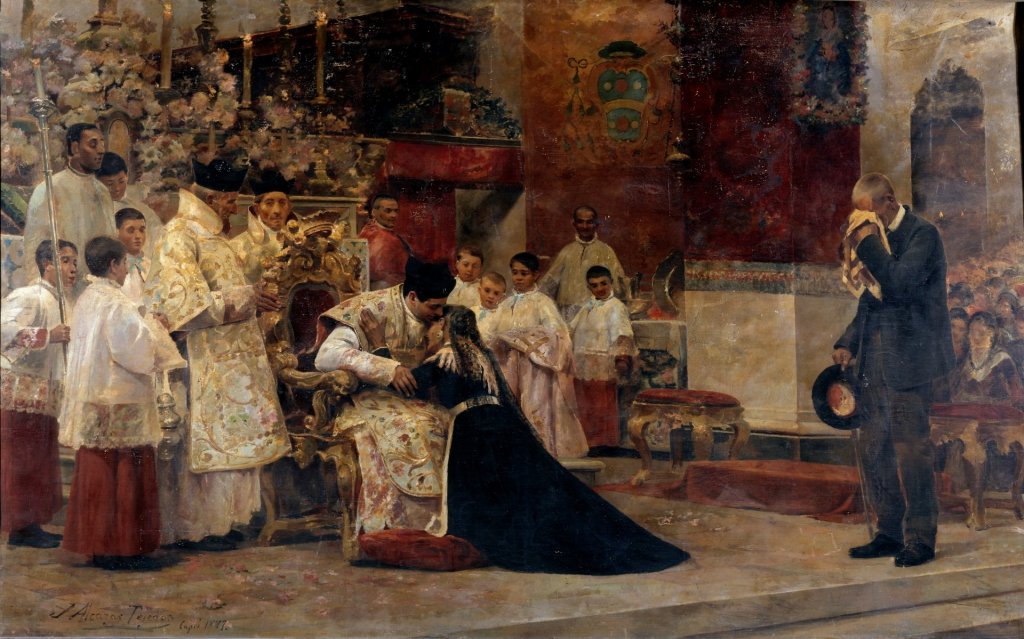
I mention these things partly because the deacons at the seminary are asking themselves all these questions – who will vest them, who will preach the homily at their first Mass, where to get their ordination chalice, etc. The time is approaching for them! It’s fun for the rest of us, who still have a little ways to go yet, to think about these questions, too. And with me having just visited one of my closest mentors in SoCal, these questions remain on my mind; I can easily imagine him filling one of those roles when my time comes, Deo volente.
At the seminary, this is the time of year when guys shift from “midterm exam” mode to “term paper” mode, in order to crank out papers before final exams roll around and we have to start studying again. The paper I’m particularly eager to write is for my class on the Gospel of John. We were instructed to select a passage from the Gospel and write an exegesis of the passage. I chose to write on the burial of Jesus. There’s a small detail in John’s account of the burial that I find moving and compelling: “Now in the place where he was crucified there was a garden, and in the garden a new tomb where no one had ever been laid.” (Jn 19:41). I was struck by the juxtaposing imagery of the pale and lifeless body of Jesus laid to rest in a a garden, a place of life, beauty, and order. I could easily imagine myself beside the tomb of my King and God, sitting there among the plants and flowers, and feeling an odd, even uncomfortable tension within myself: “He belongs out here, and I’m the one who should be in there.” It reminds me of my favorite Passiontide hymn, which has a verse that ends, “What may I say? Heaven was his home; but mine the tomb wherein he lay.” Theologians sometimes refer to this reality as the “divine exchange”: by the cross, God entered into our suffering and death in order that we might enter into His blessed life. God takes what is ours, and in exchange, gives us what is His. I suspect this “divine exchange” theology could be illuminated further by John’s account of the burial of Jesus.
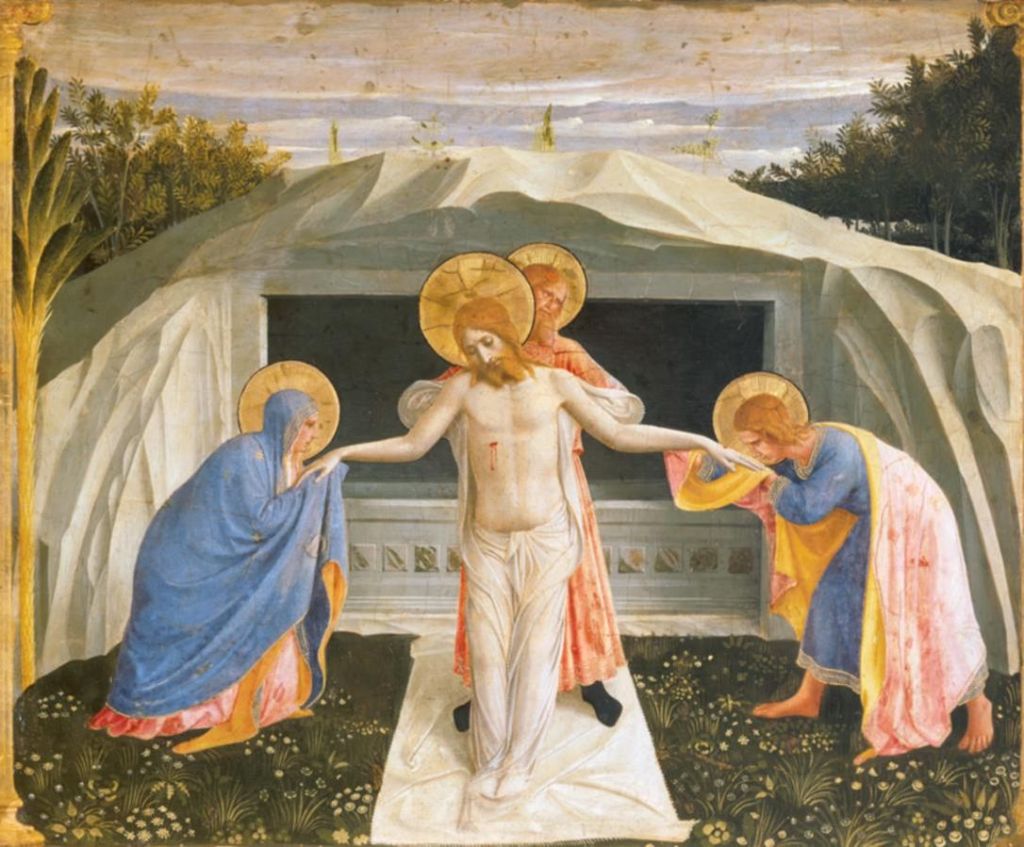
Garden imagery is highly significant in Sacred Scripture. It is usually the case that when one of the divinely inspired authors of Sacred Scripture uses the word “garden,” the author is intending for the reader to call to mind the Garden of Eden in Genesis. Eden is the only place where God and man dwell together in perfect friendship. Sin spoils that intimacy, and it isn’t recovered until Christ’s atoning sacrifice on the cross, which restores the friendship between God and man and does precisely this in a garden. Is it a coincidence that the Crucifixion and the burial take place in a garden, then? For those of us who believe that Sacred Scripture is the inspired Word of God, NOTHING IS COINCIDENCE! The sin that got us kicked out of the garden in Genesis is now overcome in the power of the Cross. Friendship with God is restored. We are back in the garden.
Now I just gotta write the thing! 12 pages… Could be worse. So if I ever preach a homily on the burial of Jesus, and that homily is 25 minutes long, you’ll know why… Blame my seminary education! I do all the time!
Lovingly,
A


Leave a Reply